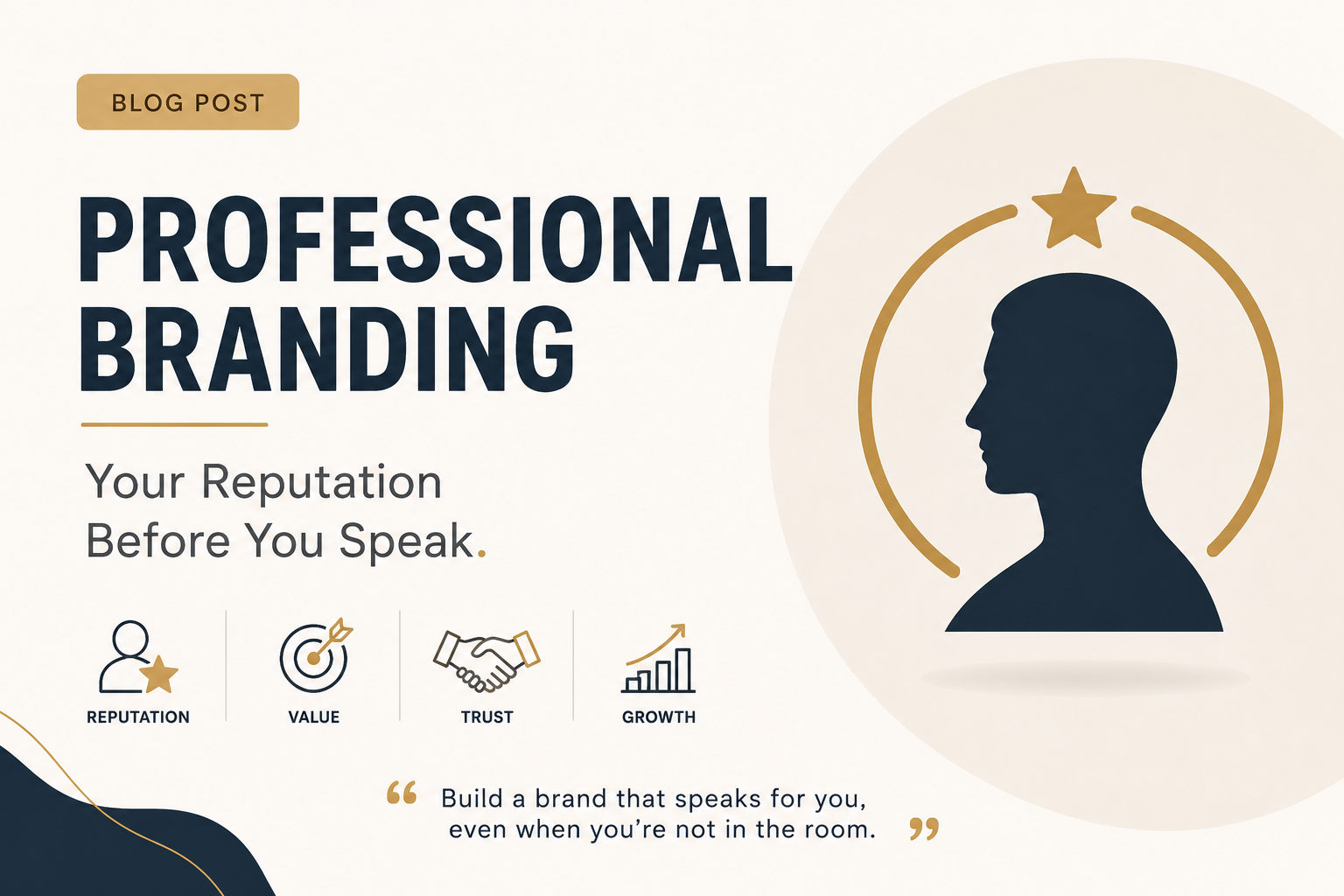
Professional success is no longer determined solely by qualifications, experience, or technical expertise. Employers, clients, investors, and business partners increasingly pay attention to how individuals present themselves, communicate their value, and differentiate themselves from others. This is where professional branding becomes essential.
Professional branding is the deliberate process of creating and managing your reputation, image, and identity in your professional environment. It is how people perceive you when you are not in the room. Whether you are an employee, entrepreneur, freelancer, consultant, student, or executive, your professional brand influences opportunities, career advancement, trust, and credibility.
A strong professional brand can open doors to promotions, partnerships, speaking engagements, business opportunities, and leadership positions. Conversely, a weak or unclear brand can limit your growth and make it difficult for others to understand your value.
What Is Professional Branding?
Professional branding refers to the intentional effort to establish and communicate your unique skills, values, expertise, personality, and professional identity.
It is the combination of:
- Your reputation
- Your expertise
- Your communication style
- Your online presence
- Your personal values
- The experience people have when interacting with you
Professional branding is not about pretending to be someone else. Instead, it is about strategically showcasing your authentic strengths and ensuring that others understand the value you bring.
Why Professional Branding Matters
1. Creates Career Opportunities
Many opportunities arise not because of what people know about your qualifications but because of what they know about your reputation.
When people recognize you as knowledgeable, reliable, and competent, they are more likely to recommend you for:
- Promotions
- New jobs
- Business partnerships
- Leadership positions
- Consulting opportunities
A strong professional brand makes you memorable and valuable.
2. Builds Trust and Credibility
Trust is one of the most important currencies in professional life.
People prefer working with individuals they perceive as:
- Competent
- Honest
- Dependable
- Professional
A well-developed personal brand consistently demonstrates these qualities and strengthens your credibility over time.
3. Differentiates You from Competitors
In many industries, thousands of people possess similar qualifications and experience.
Professional branding helps answer the question:
"Why should someone choose you instead of someone else?"
Your unique combination of skills, experiences, values, and personality becomes your competitive advantage.
4. Increases Visibility
Talented people often remain unnoticed because they fail to communicate their value effectively.
Professional branding helps increase visibility through:
- Social media
- Networking
- Public speaking
- Content creation
- Professional associations
The more visible your expertise becomes, the more opportunities are likely to follow.
5. Enhances Professional Influence
Influence is not limited to executives and politicians.
Professionals who build strong brands often become respected voices in their industries. Their opinions carry weight, and people seek their insights and advice.
Influence creates opportunities for leadership, mentorship, and industry recognition.
Key Elements of Professional Branding
1. Professional Identity
Your professional identity defines who you are and what you represent.
Ask yourself:
- What are my strengths?
- What expertise am I known for?
- What values guide my decisions?
- What professional problems do I solve?
The answers form the foundation of your brand.
2. Personal Reputation
Your reputation is built through your actions and behavior.
It is influenced by:
- Reliability
- Integrity
- Professionalism
- Consistency
- Work quality
A reputation takes years to build but can be damaged quickly. Protecting it should always be a priority.
3. Professional Appearance
First impressions matter.
Your appearance should reflect your industry standards while projecting confidence and professionalism.
This includes:
- Appropriate dressing
- Personal grooming
- Body language
- Professional etiquette
Professional appearance communicates competence before you even speak.
4. Communication Skills
Strong communication is a powerful branding tool.
Professionals with effective communication skills often stand out because they can:
- Express ideas clearly
- Listen actively
- Build relationships
- Resolve conflicts
- Inspire confidence
Communication occurs both online and offline.
5. Online Presence
In the digital age, your online presence is often your first introduction.
Potential employers, clients, and partners frequently search online before making decisions.
A strong digital presence includes:
- Professional social media profiles
- Industry-related content
- Thought leadership articles
- Positive online interactions
- Updated professional information
Your online footprint should align with your professional goals.
How to Build a Strong Professional Brand
Step 1: Define Your Brand
Start by identifying:
- Your expertise
- Your strengths
- Your career goals
- Your core values
- Your target audience
Clarity is essential. If you cannot clearly define your brand, others will struggle to understand it.
Step 2: Develop a Personal Brand Statement
A personal brand statement summarizes who you are and the value you provide.
Example:
"I help organizations improve employee performance through emotional intelligence training and leadership development."
A strong statement communicates expertise and purpose.
Step 3: Build Professional Relationships
Networking remains one of the most effective branding strategies.
Focus on:
- Building genuine relationships
- Providing value to others
- Participating in professional events
- Joining industry associations
- Maintaining meaningful connections
Strong networks often lead to unexpected opportunities.
Step 4: Share Valuable Knowledge
Content creation helps establish expertise.
You can share:
- Articles
- Blog posts
- Videos
- Podcasts
- Industry insights
- Case studies
Consistently sharing useful information positions you as a trusted authority.
Step 5: Maintain Consistency
A strong brand requires consistency.
Ensure your:
- Actions
- Communication
- Online profiles
- Professional conduct
- Personal values
all align with the image you want to project.
Consistency builds trust and recognition.
Step 6: Seek Feedback
Ask colleagues, mentors, clients, and supervisors:
- How do they perceive you?
- What strengths do they associate with you?
- What areas need improvement?
Constructive feedback helps refine and strengthen your brand.
Common Professional Branding Mistakes
1. Lack of Authenticity
People quickly recognize when someone is pretending.
Authenticity creates stronger connections and lasting trust.
2. Neglecting Online Presence
An outdated or unprofessional online profile can harm your credibility.
Regularly review and update your digital presence.
3. Inconsistency
Sending different messages in different environments creates confusion.
Consistency strengthens brand recognition.
4. Ignoring Professional Development
Professional branding is not only about visibility.
It must be supported by genuine competence and continuous learning.
5. Focusing Only on Self-Promotion
Effective branding balances visibility with value creation.
People are more attracted to professionals who help, educate, and inspire others.
Professional Branding in the Digital Era
Technology has transformed how professional brands are built.
Today, individuals can establish authority globally through:
- Personal websites
- Blogs
- Online communities
- Virtual events
- Professional publications
Digital platforms provide opportunities to showcase expertise beyond geographical limitations.
Professionals who embrace these tools often enjoy greater visibility and influence.
The Long-Term Benefits of Professional Branding
Investing in your professional brand can produce significant long-term rewards:
- Increased career opportunities
- Higher earning potential
- Stronger professional networks
- Greater credibility
- Industry recognition
- Leadership opportunities
- Enhanced business growth
Professional branding is not a short-term project. It is a lifelong commitment to building a reputation that reflects your expertise, values, and contributions.
Conclusion
Professional branding has become an essential component of career success in the modern world. It influences how others perceive your competence, credibility, and value. Regardless of your profession or industry, a strong professional brand helps you stand out, build trust, attract opportunities, and achieve long-term growth.
The most successful professionals understand that branding is not about self-promotion alone. It is about consistently demonstrating expertise, integrity, professionalism, and value. By intentionally developing your professional brand, you position yourself for greater influence, recognition, and success throughout your career.
Your professional brand is your professional legacy. Start building it today.
About the Author
Isaac Mintah
Entrepreneur, Author & Emotional Intelligence Coach. Founder of Activezoon Universal Limited Company.
Grab a Copy
Emotional Intelligence For Career Growth
Isaac Mintah's flagship book — get your copy now from Amazon or Jumia Ghana.
Leave a comment
Your email address will not be published. Required fields are marked *