
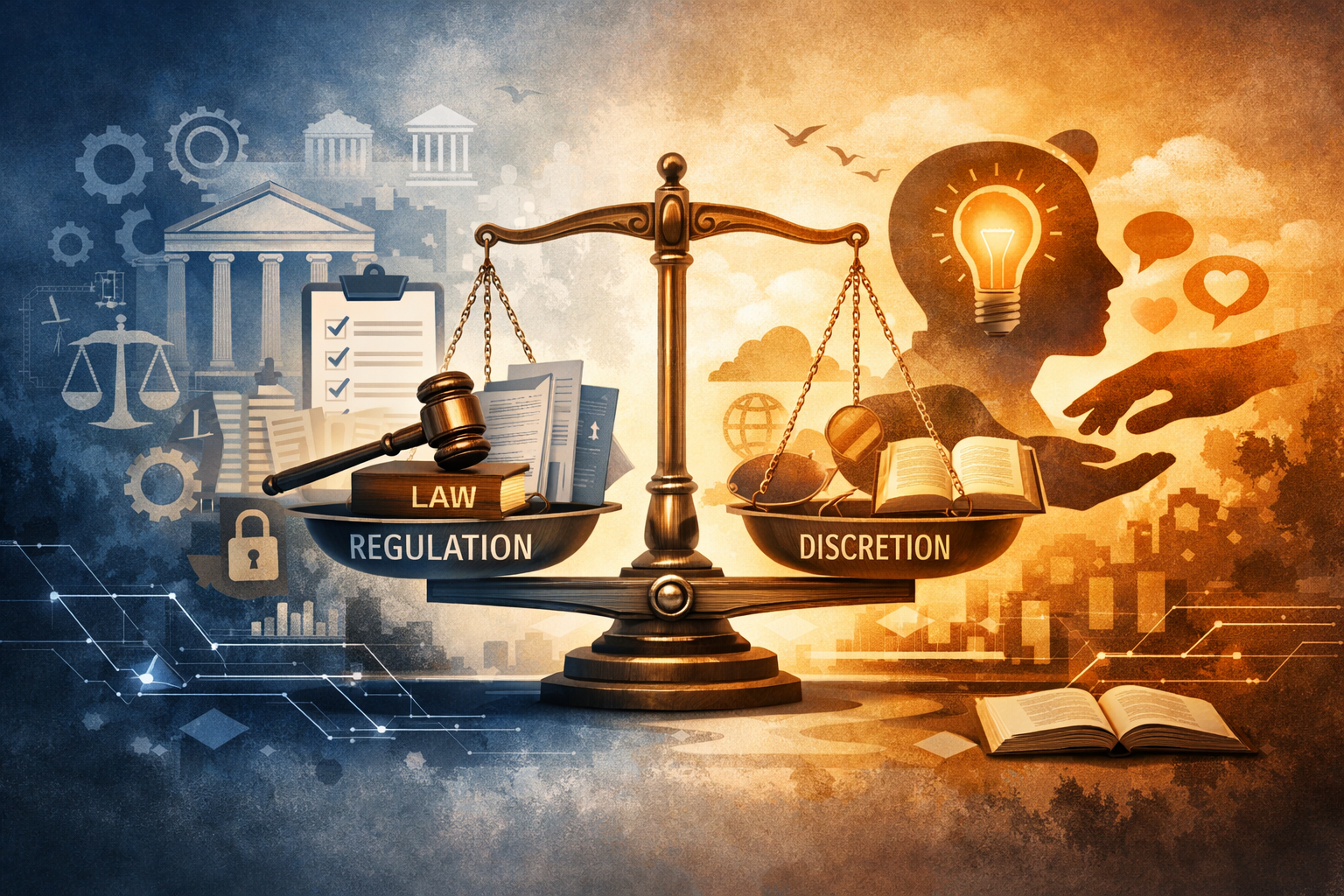
Rules form the foundation of every organized society. They guide behavior, regulate interactions, and provide structure for decision-making at both individual and institutional levels. In modern society, rules generally fall into two broad categories: regulated rules and discretionary rules. Understanding how these two forms of rules operate and interact is essential for effective governance, ethical leadership, and social stability.
Understanding Regulated Rules
Regulated rules are formal standards established by recognized authorities such as governments, institutions, and organizations. These rules are clearly defined, written, and legally enforceable. Their primary purpose is to create order, predictability, and accountability within society.
Examples of regulated rules include national laws, traffic regulations, labor policies, and organizational codes of conduct. Because they are codified, regulated rules offer consistency in application and provide clear consequences when violations occur. Enforcement mechanisms such as courts, regulatory bodies, and internal disciplinary systems ensure compliance.
Despite their importance, regulated rules have limitations. They can be rigid and slow to adapt to social change. Complex regulatory systems may also create confusion, making compliance difficult for individuals and organizations. In some cases, excessive regulation can lead to bureaucratic inefficiencies and high implementation costs.
The Nature of Discretionary Rules
Discretionary rules are informal guidelines shaped by personal judgment, ethical reasoning, and cultural norms. Unlike regulated rules, they are not written into law or formally enforced by authorities. Instead, they rely on shared values and individual responsibility.
Cultural traditions, social etiquette, professional ethics, and moral expectations are common examples of discretionary rules. These rules allow flexibility and enable individuals to respond to unique situations where rigid regulations may not be suitable. They are particularly important in diverse societies, where cultural sensitivity and context matter.
However, discretionary rules also present challenges. Their subjective nature can lead to inconsistent application. Differences in values, beliefs, and cultural backgrounds may result in conflicting interpretations of acceptable behavior. The absence of formal enforcement mechanisms can also weaken accountability.
The Interaction Between Regulated and Discretionary Rules
In practice, regulated and discretionary rules are deeply interconnected. Many legal systems rely on discretion in areas such as judicial decision-making, law enforcement, and organizational leadership. At the same time, cultural norms and ethical values often influence how regulated rules are interpreted and enforced.
Effective governance requires a balance between these two forms of rules. Regulated rules provide structure and fairness, while discretionary rules introduce flexibility and human judgment. When properly integrated, they enhance decision-making and promote social cohesion.
Contemporary Challenges and Future Directions
Modern societies are constantly evolving due to globalization, technological advancement, and changing cultural values. These developments require rule systems that are both structured and adaptable. Digital technologies and artificial intelligence now play an increasing role in regulation, compliance, and enforcement, raising new ethical and governance questions.
Future rule frameworks must account for these changes while maintaining a balance between regulation and discretion. Policymakers, organizations, and communities must continuously assess how rules are created and applied to ensure they remain relevant, fair, and effective.
Conclusion
Regulated and discretionary rules are essential components of modern society. While regulated rules ensure order, consistency, and accountability, discretionary rules provide flexibility, ethical sensitivity, and contextual awareness. Understanding their strengths, limitations, and interaction offers valuable insight into governance, leadership, and everyday social behavior.
By integrating both forms of rules thoughtfully, societies can build systems that are not only lawful but also responsive, humane, and sustainable.
About the Author
Isaac Mintah is a Ghanaian author, entrepreneur, and digital publisher with a strong interest in social governance, human behavior, and rule-making systems. He is the founder of Activezoon Universal Limited Company, the parent organization of The Hub Web, a media and publishing platform, and Activezoon.com, an online marketplace connecting buyers and sellers across Africa.
Isaac holds an Advanced Professional Certificate in Strategic Business Management from the Metropolitan School of Business and Management, United Kingdom, and a Diploma in Private Investigating. He is currently pursuing a Bachelor of Arts in Psychology with Information Studies at the University of Ghana. Professionally, he serves as a Human Resources Administrator at G4S Security Services (Ghana) Limited.
His writing explores the intersection of regulation, discretion, ethics, culture, and leadership, with a focus on evidence-based analysis and practical relevance. Through his publications and digital platforms, Isaac Mintah continues to contribute to informed public discourse and sustainable social development.
About the Author
Isaac Mintah
Entrepreneur, Author & Emotional Intelligence Coach. Founder of Activezoon Universal Limited Company.
Grab a Copy
Emotional Intelligence For Career Growth
Isaac Mintah's flagship book — get your copy now from Amazon or Jumia Ghana.
Leave a comment
Your email address will not be published. Required fields are marked *